
Mutual Funds
Wealth creating solutions for everyone and every objective
Investment decisions by professional fund managers
Regulated by SEBI
Ease of investing
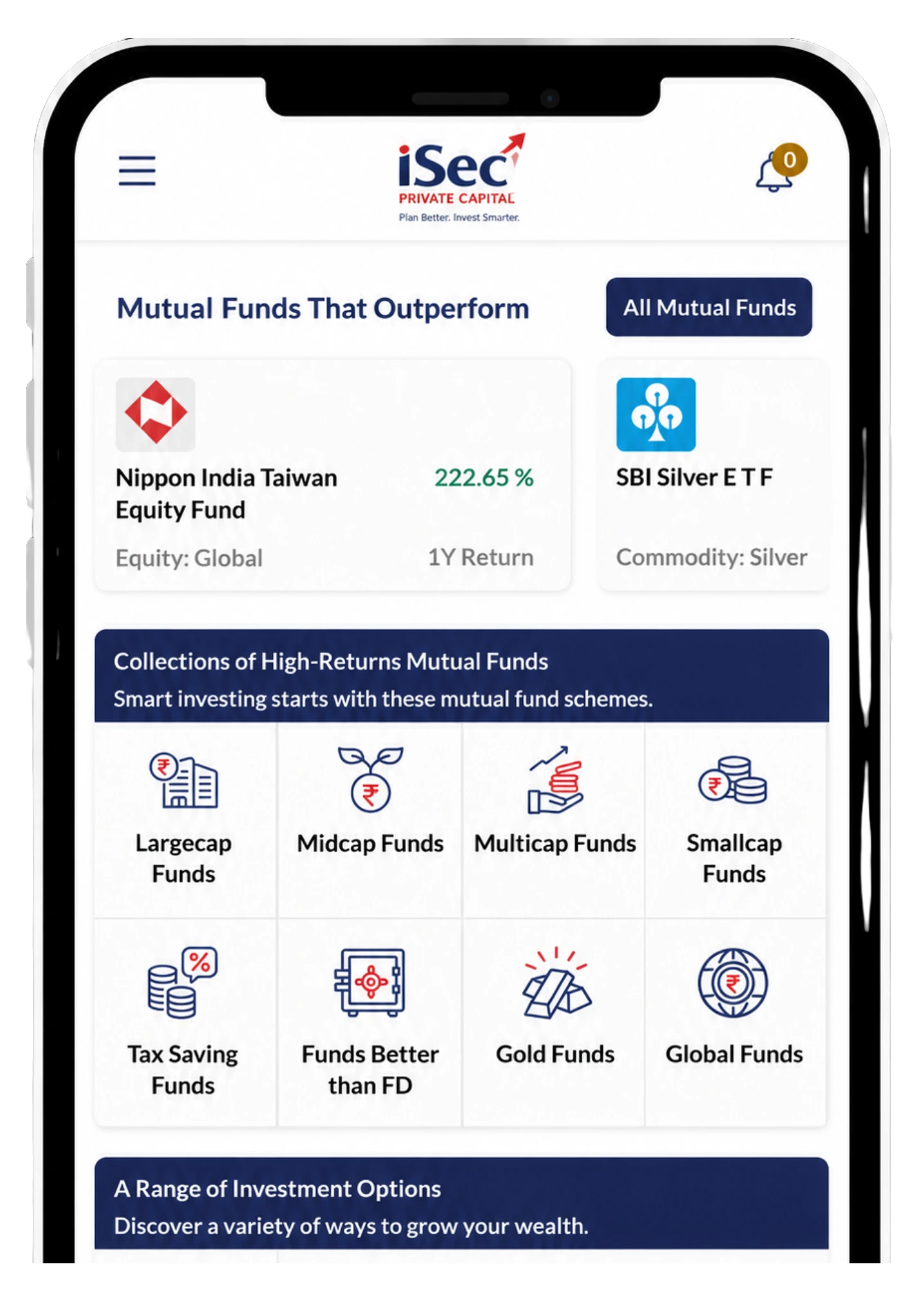
Why Invest in Mutual Funds?

Growth Potential
Participate in long-term market opportunities through diversified investments.

Risk Diversification
Reduce concentration risk through professionally managed portfolios.

Expert Management
Benefit from professional research-driven fund management.
Equity Funds
Balanced Funds
Debt Funds
The funds invest predominantly in stocks of listed companies based on the market capitalisation guidelines of SEBI, which are as under

Largecap
Top 100 companies by market capitalization.

Midcap
101st to 250th companies by market capitalization.

Smallcap
251st and above companies by market capitalization.

Large Cap
Minimum 80% investment in largecap stocks
Mid Cap
Minimum 65% investment in midcap stocks
Small Cap
Minimum 65% investment in smallcap stocks

Multi Cap
Minimum 25% each in large,mid, and smallcap stocks.

Flexi Cap
Invests across market cap

ELSS
Offers tax deduction u/s 80C of the income tax act of up to ₹1,50,000 a year.
Combination of investing in debt and equity

Equity-oriented balanced funds: Minimum 65% investment in stocks.

Debt-oriented balanced funds: Minimum 65% investment in debt securities.
Invests in securities generating fixed income
Liquid Fund
Investment in money market securities with a maturity of 91 days or less.

Money Market Fund
Invests in money market instruments with a maturity of less than one year.

Corporate Bond Fund
Invests predominantly in Corporate Bonds with the highest interest rates.

Gilt Fund
Invests 80% of the corpus in Government securities.

Credit Risk Fund
Invests 65% of the corpus in corporate bonds with lower ratings and slightly better returns.

Dynamic Bond Fund
Invests in debt securities of varying maturity.
Major Categories of Mutual Funds
Explore diversified fund categories designed to balance growth, manage risk, and support long-term investment objectives through strategic allocation.

Equity Funds
Designed for long-term growth through stock market investments.

Debt Funds
Focused on stability and income through fixed income instruments.

Hybrid Funds
Balanced approach combining equity and debt exposure.
Ways to invest in Mutual Funds

Lump Sum Investment
Invest a larger amount at one time to benefit from long-term growth opportunities.

SIP
Reduce concentration risk through professionally managed portfolios.
How It Works

Assess Goals
Understand risk profile and investment objectives.

Select Funds
Choose suitable mutual fund categories aligned to goals.

Start Investing
Begin SIP or lump sum investments with disciplined monitoring.